
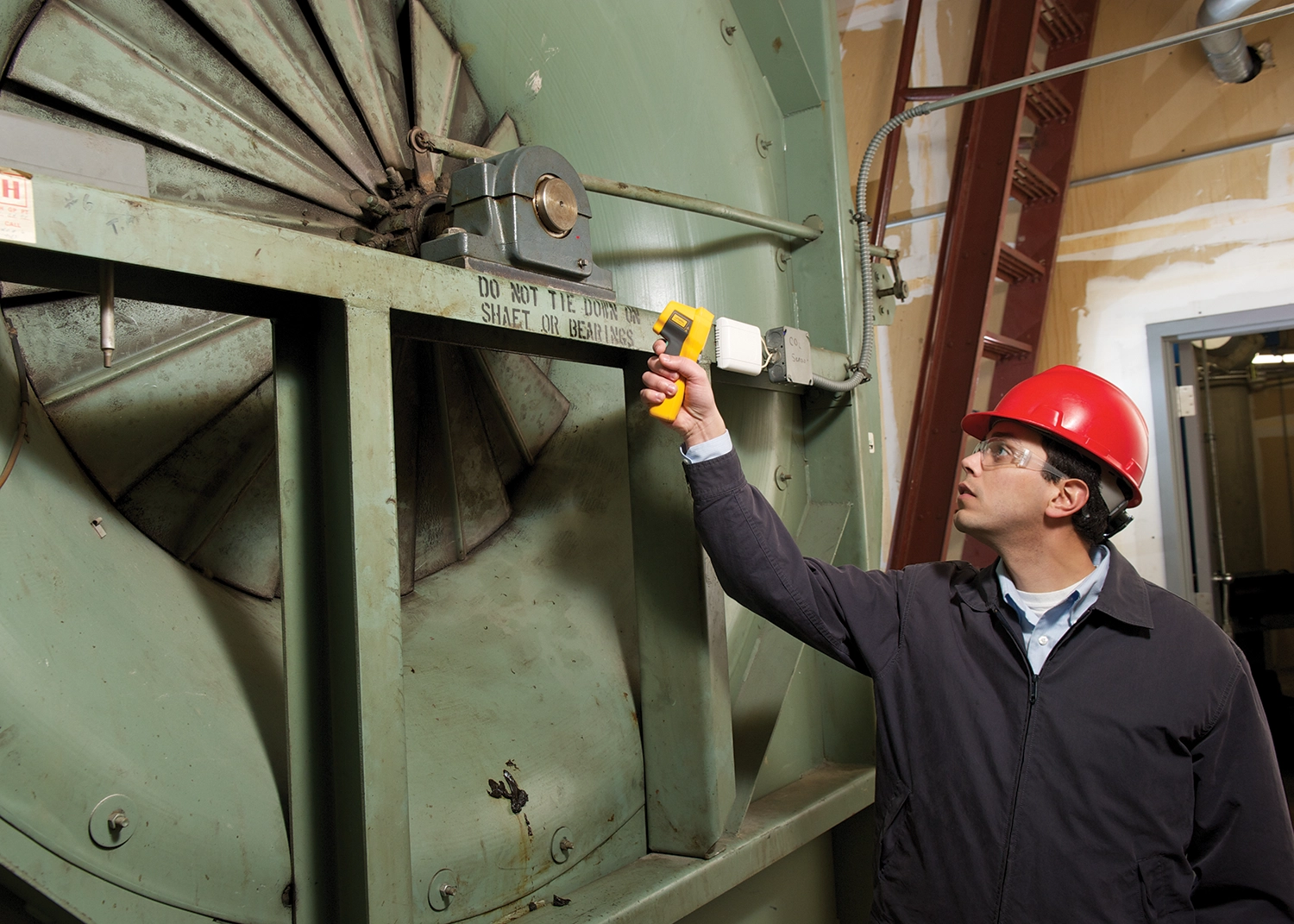
Hand-held infrared (IR) thermometers have gone from exotic to commonplace, and it’s easy to see why. Portable and convenient, they give technicians a fast way to check product and process quality without making contact with the target — reducing downtime and improving safety on the job.
Modern IR thermometers have also considerably improved targeting accuracy. Rather than relying on a single centre-spot laser, some models use dual rotating lasers to trace the exact outer boundary of the measurement area, so there’s no guesswork about what’s actually being read.
Three ways to measure temperature with an IR thermometer
- Spot measurement: Track a single point over time — ideal for trending or comparing readings to a specification.
- Comparative measurement: Compare two points against each other, such as the inlet and outlet of a steam trap, to identify a fault.
- Area scanning: Sweep a continuous surface to detect hot or cold spots on panels, housings, or structures — useful for spotting restricted airflow or blocked cooling.
Where infrared thermometers are used
IR thermometers are ideal for moving machinery, hazardous or hard-to-reach targets, and quick “big picture” assessments — while also building a trending record that can support insurance and compliance requirements.
- Electrical maintenance: Detect heat build-up from loose connectors, faulty terminations, or failing overload protection before they cause a shutdown.
- Equipment maintenance: Audit motors, gearboxes, generators, and bearings to catch problems before they become expensive repairs.
- Building controls: Perform fast HVAC/R energy audits — a strong distance-to-spot ratio makes it easy to check elevated vents and returns without a ladder.
- Process and product monitoring: Verify consistent temperatures across production lines, from rubber and plastic to food products.
Additional features like lighted displays for low-light conditions and audible or visible high-temperature alarms make these tools even more practical for day-to-day maintenance work — helping teams catch small issues before they become costly failures.